

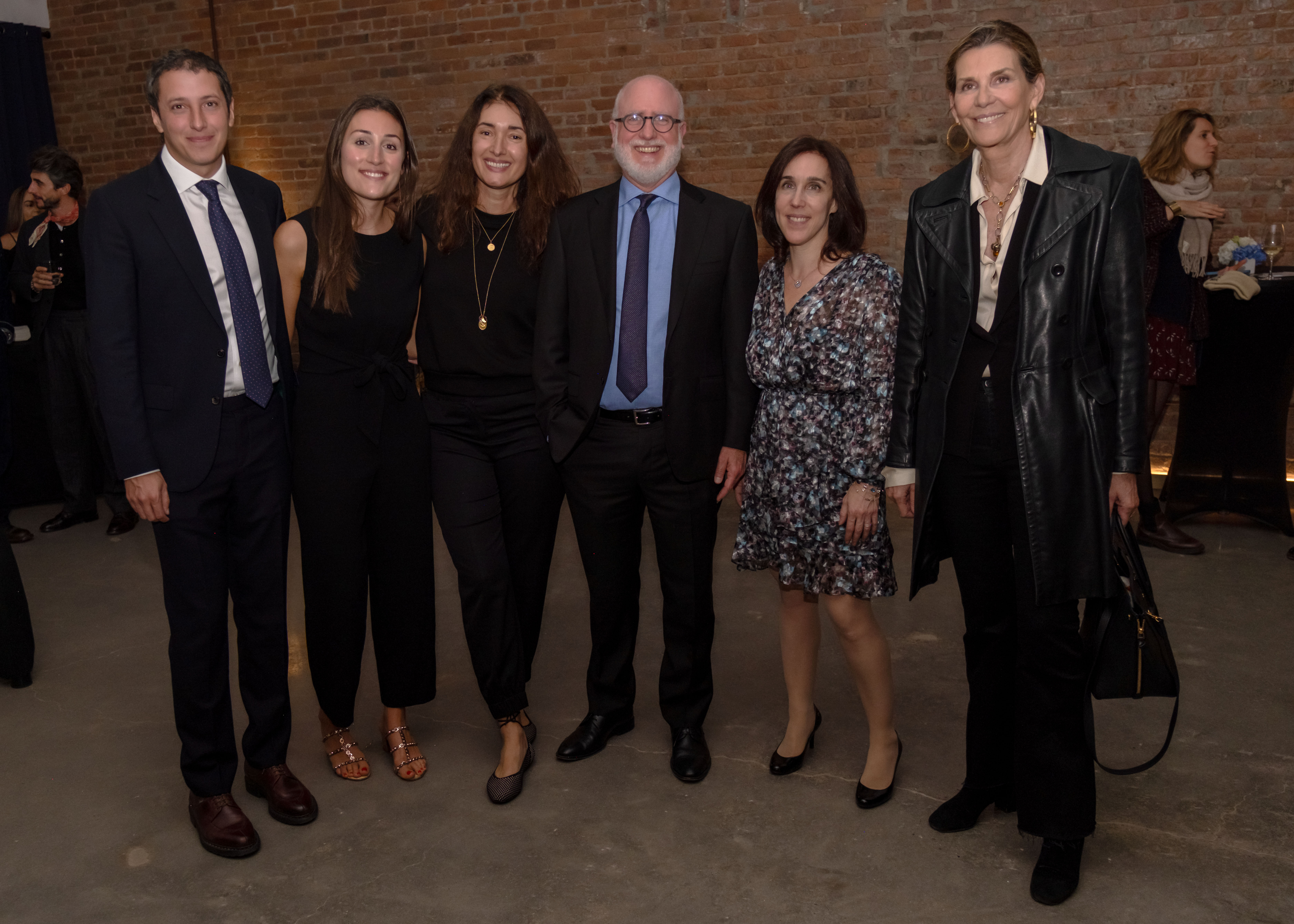
“Three years ago, my life was close to perfect,” Alexandra Curiel began, speaking to friends and donors at a fundraising evening in New York hosted by Petrossian, Angelina, and the non-profits Tous En Tête and Paris Brain Institute America.
“I had a loving husband, two great daughters, and a fulfilling job,” she continued. “Mostly, my life was great because I had never heard of glioblastoma. I knew what a brain tumor was — a cousin had died from one — but I thought it would never happen to us. We were happy. We felt protected.”
She was wrong.
As Alexandra reminded the audience, a brain tumor can strike anyone, at any age, without warning. Though rare, studies show a slow but steady rise in glioblastoma cases. For patients and families, the diagnosis feels like opening a door that leads straight into a wall — with no way back.
It’s not enough that glioblastoma is a short-term death sentence,” Alexandra Curiel said. “It steals your loved one before they are even gone — robbing memory, personality, movement, and hope. What makes it unbearable is that there is no cure. Even when surgery is successful, it comes back. Life expectancy is about twelve months. And nothing has changed because research has been underfunded.
Alexandra and her daughters lost their husband and father to glioblastoma — the most common, and the deadliest, form of brain cancer.

In the U.S. alone, the disease claims more than 10,000 lives each year.
Despite decades of advances in oncology, these tumors remain almost entirely incurable. Their ability to mutate, evade therapy, and manipulate the immune system makes them one of medicine’s greatest enigmas.
Refusing to let grief become silence, Alexandra turned it into action — raising awareness and funds to drive research. Her determination inspired the Paris Brain Institute (ICM) and the U.S. non-profit Paris Brain Institute America (PBIA), a 501(c)3 charitable organization, to launch an ambitious $1.9 million Franco-American research initiative with Harvard Medical School: New Therapeutic Strategies to Tackle Glioblastomas.
I am counting on you.
Martine Assouline, President of Paris Brain Institute America
“With work already underway and a first round of funding secured, we finally have hope,” said Martine Assouline, President and Founder of PBIA. “Hope that neuro-oncologists will one day defeat this aggressive disease — and find a cure.”
“We are determined to change the paradigm on brain cancers,” added neurosurgeon Elly Chaskis, founder of Tous En Tête.
At the Paris Brain Institute, Mehdi Touat, MD, PhD, and his team are uncovering how glioblastomas evolve. “We now understand the molecular and genetic changes that drive tumor formation,” Touat explained. “That’s the first step toward identifying drugs that can stop it.”
One of their major discoveries, he added, is the tumor’s extraordinary adaptability. “These cancer cells can resist chemotherapy and even immunotherapy. Whenever they detect a treatment nearby, they change. Our goal is to identify the proteins that allow them to do this — and block them.”
Touat’s co-lead at Harvard, Keith Ligon, MD, PhD, highlighted how AI and 3D-imaging technologies are accelerating discovery. “We’re now able to visualize the vulnerabilities of these cells — things that were literally invisible before,” he said. “This allows us to move beyond the failing one-size-fits-all approach toward personalized therapies tailored to each patient’s tumor.”
While recent years have brought several new FDA approvals for related brain tumors — a first, decades after the approval of chemotherapy — Ligon noted they’re still not effective enough. “We’re learning, but we need to understand why progress is slow — and how to make it faster.”
Touat sees broader implications: “The mechanisms we’re studying in glioblastoma could help us tackle other difficult cancers — pancreatic, for instance.”
For Alexandra, hope lies in persistence. “When research is funded, it produces miracles,” she said.
When I was a child, AIDS was a death sentence. Today, people live with it. Now is the time to tackle glioblastoma — once and for all.
Alexandra Curiel
“With $950,000 already raised through Paris Brain Institute America, we still need another million dollars to complete this transatlantic research project,” Assouline said. “A modest sum compared to the impact it could have — curing cancers far beyond glioblastomas. I’m counting on you.”
To support this research and fast-forward the development of an effective drug to defeat glioblastomas, visit Paris Brain Institute America.


Contact me for more information on how to join, advance brain research and help defeat glioblastoma. JC Agid)

Leave a Reply