

How are you?
In the midst of winter, I found that there was within me an invincible summer. Albert Camus
“How are you, Olivier Goy?”
This was not the question I sent you via WhatsApp last Tuesday morning, January 23 to be exact, to begin our short epistolary conversation; it was your first answer. You asked me to ask you: “How are you?”
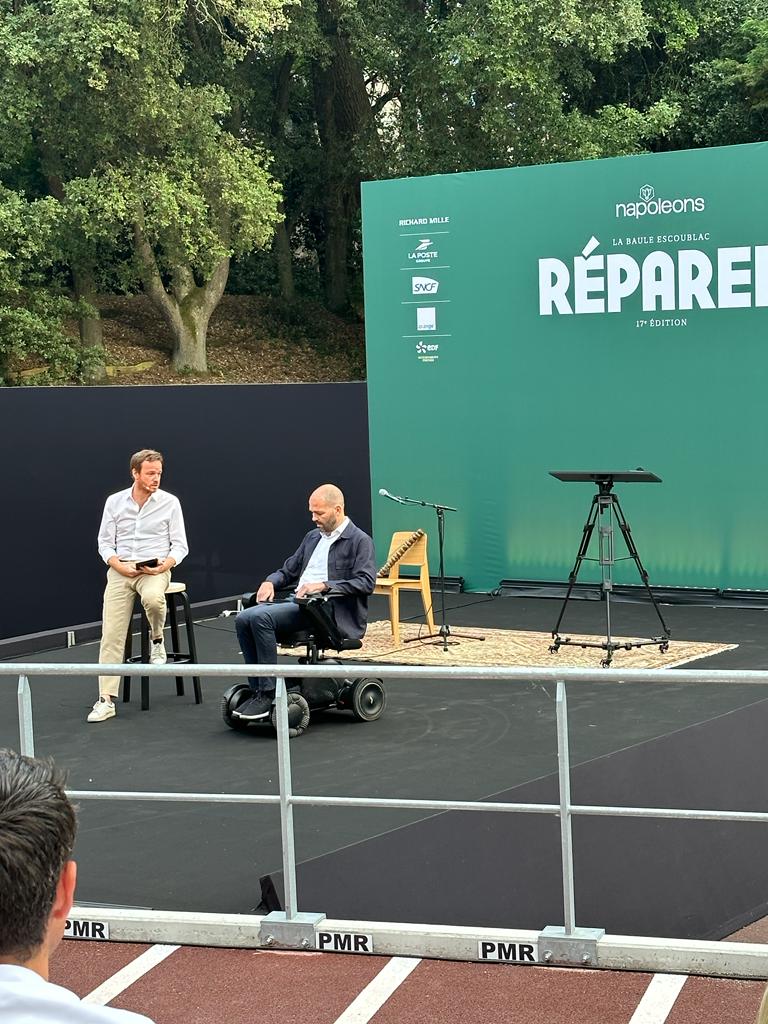
We have never met, dear Olivier, but as hundreds of thousands of people do in France by now, I know who you are. Colleagues and friends at the Paris Brain Institute introduced us formally by email a few weeks ago. Your story is at the heart of a unique, powerful, poetic documentary film, Invincible Summer.
When I asked if I could interview you and write this post, you were waiting to hear French Movie Academy Les César’s final selection of nominated films. You and journalists in France lobbied, campaigned and whispered to the voters, ‘Choose Invincible Summer,’ not to enjoy a few minutes of fame on stage but to use this platform to raise awareness about your disease. Fame is, after all, a fleeting commodity. Art, nonetheless, grows as a tree to eventually become a forest.
I learned about you only recently, Olivier. Last June 29, my younger brother sent me a note and a picture of you in an electric wheelchair, sitting on the running tracks of a stadium in the seaside town of La Baule, France. You were answering Alexandre Kouchner’s questions at Les Napoléons’ summer conference.
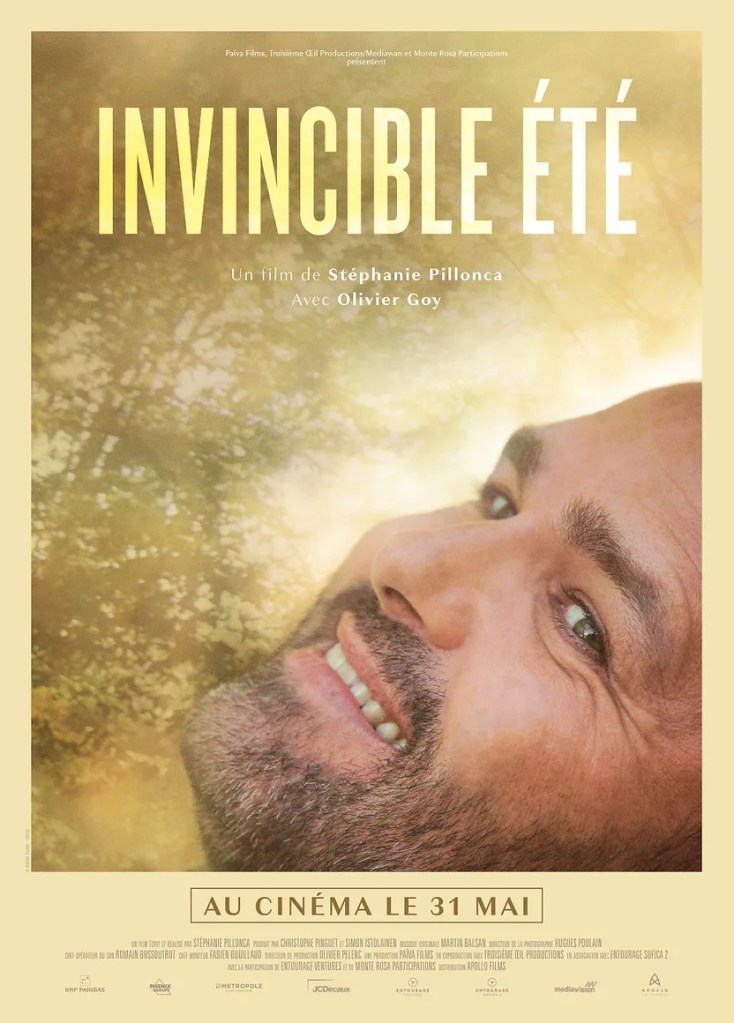
“Were you at the Paris Brain Institute for his photography exhibition?” my brother André asked me in a text message while you were speaking. “This conversation is very emotional,” he added in the same message.
“I was not,” I replied. “Tell me more.”
I was supposed to be at Les Napoléons, Olivier. We should have then met. It is one of my favorite summits, but I was attending meetings in New York.
Now we have met. I know your story. You, the booming 46-year-old tech entrepreneur, husband, and father of two boys, in December 2020, you were diagnosed with Amyotrophic Lateral Sclerosis (ALS), a.k.a. la Maladie de Charcot (the name of the scientist who fully identified this common yet orphan disease in 1874), a.k.a. Lou Gehrig’s disease in the United States.
Like you, Lou Gehrig, an American baseball player, gradually became a prisoner of his body. This fatal disease has no cure. Once diagnosed, life expectancy is short. Three to six years, a few extra months perhaps, as the nerve cells in your spinal cord and brain slowly degenerate. A trap swallows muscles, one by one—while your mind remains intact, conscious of everything and everyone.
“Were you at the Paris Brain Institute for his photography exhibition?”
So, you asked me to ask you, ‘How are you?’ You did not really give me the time to ask this question, did you? You answered it before I could, and here is what you replied:
“It is a seemingly harmless question, but it’s actually a difficult one,” you wrote. “If you observe me quickly, I decline. I don’t move as well. I no longer speak. I only drink through a stomach tube.”
And how could it be otherwise?
You have spent the last three years monitoring every muscle of your body. Are they louder than the day before? The extremities of your hands and feet, legs and arms, your ability to drink, and your vocal cords gradually let you down. Catching your breath becomes increasingly challenging day by day. With the diagnosis came the explanation. When you decided to go public about your disease in March 2021, four months to the day after you learned that a pain in your arm while playing tennis was actually the first sign of Lou Gehrig’s disease, your voice was the same as it was before. Clear, confident, and fast-paced. You recorded a podcast and did your “coming out,” as you said.
“The months that preceded this podcast were the worst of my life,” you told Alexandre Kouchner at Les Napoléons.
And how could it be otherwise?
There is no explanation for this disease. I checked. Genetics are rarely the cause. Neuroscientists still do not know what triggers ALS, and you are not the only one who suffers from it. In the United States alone, the Centers for Disease Control estimates 30,000 new cases every year, and 500,000 worldwide according to the President of Paris Brain Institute Gérard Saillant. When I sent invitations to Invincible Summer premiere in the U.S., three people told me that one of their parents recently passed from it.
ALS is an orphan disease, the least rare of the rarest. Uncurable. It is the date with death.
I rarely think about my death, Olivier. It was probably the same with you before, which is true with most people I know. It is silent, invisible, and not on my calendar. Of course, it is there, somewhere, but unlike its behavior with you, it has yet to show its shadow.
Death did not knock on your door; it opened it. It rushed in and made itself comfortable, moving furniture around, ignoring the people you love, the 100 employees, associates and business partners you work with at October, your company, shutting down one by one the little things that made your life so pleasurable.
You said doctors and a psychologist blazed a trail to transform your life’s unexpected darkness into an opportunity.
Invincible: incapable of being conquered, overcome, or subdued
“If you observe me quickly, I decline,” you wrote me, but then you said, “If you take a closer look, however, you’ll see a man in action. Full of dreams. Full of plans. Surrounded by friends and love. Very lucky.”
To ‘How are you,’ people commonly respond, ‘Very well and you,’ the answer we usually don’t listen to as we walk away relieved. Not you. The French novelist Romain Gary once wrote it is easier to confide in strangers. Not you. You answer to all of us: strangers like me and your friends. Your answer is available to all.
You are indeed a man in action, unstoppable.
When the disease caught you by surprise, you walked away from a moment of doubt and despair to prepare for its consequences and revisit your approach to life. Why would you be punished twice, you asked, from the disease and the void created?
When you realized that you were not the only victim of ALS—and yet had never heard of it, you took the stage. You met with other patients and allowed filmmaker Stéphanie Pillonca’s camera to follow you everywhere.
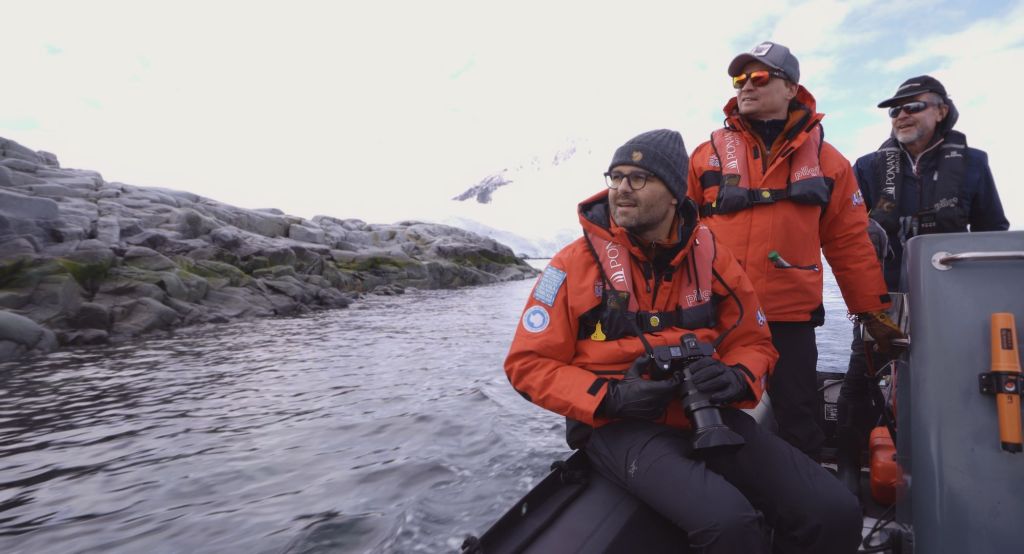
When your body started dimming, you decided to travel to Antarctica with your friends, calling it “an enchanted interlude out of time.”
When you could no longer speak, you used an app to translate your text into a computer-generated version of your voice you had previously recorded.
Since you have learned there is no cure for this disease, you have dedicated your days to raising awareness and funds to advance brain research.
Your photographs allow us to see a world of beauty through your eyes. They are either colored or monochromic words, musical notes, silences, and stories. What were you thinking when you photographed Brazilian photographer Sebastião Salgado’s son, who suffers from Down syndrome, posing for you with his parents? “I am not as talented as your dad,” we can hear you tenderly tell the son of the immense photographer in Invincible Summer.
Is there a point to compare talents?

You put your actions to work. How many talks did you give in big corporations, at KPMG, Deloitte, BNP Paribas, and Cap Gemini, to name a few, to help them change their behavior towards disability and long-term disease? At Les Napoléons, you mentioned Publicis and its CEO Arthur Sadoun’s crusade to change corporate culture for employees facing cancer.
There is a glimpse of hope. Your voice is vital, Olivier, but it also has a fee. You asked all these corporations to donate to the Paris Brain Institute to fast-forward research and find cures for ALS in exchange for your time, not for you but the generations to come.
Thanks to these talks, sales of your photographs, private screenings and the profits of the movie Invincible Summer, and a special evening in Paris last year, you have already raised over 1.7 million U.S. dollars.
As you wrote on WhatsApp, you are “surrounded by friends and love,” as seen in every sequence of Stéphanie Pillonca’s film. “Very lucky,” you added.
Would you allow me to think here of other patients, the invisible ones without a loving spouse, friends, and compassionate doctors, the ones drowning in what must be an insufferable loneliness?

You are also a man full of dreams, you said.
And you wrote me: “Very excited to hear the César’s nominations tomorrow (January 24) and if the film is selected.”
You have been campaigning to have Invincible Summer nominated for the French Movie Academy Awards alongside, journalists and other media on radio and television. How perfect would it be to leverage the César’s television platform to raise awareness about brain research, Lou Gehrig’s disease, and one or two things you have learned along the way?
I have watched Invincible Summer twice. The film’s showing will last long as its audience grows exponentially. I am not a film expert, so please forgive me when I say that nominating Invincible Summer is a no-brainer. Don’t art and culture also aim to inspire positive global conversation, especially in your case? Author and rabbi Delphine Horvilleur said that “you grant us a moment of appeasement in these times of hardship and darkness for many of us.” We all need it, whether we are sick or in good health, and I refuse to give up on my faith in others. Call me candid.
The first thing I did when I woke up on January 24 was to check the “movie” news. The nominations were now official. And Invincible Summer was not included. You know, Olivier, stupidity is often the preferred and most shared snack of the day. Ask actor Ryan Gossling, who posted the following statement online after the American Academy Awards announced his nomination for “Best Supporting Actor” the day before the French snubbed Invincible Summer: “I never thought I’d be saying this, but I am also incredibly honored and proud that’s it’s for portraying a plastic doll named Ken. But there is no Ken without Barbie, and there is no Barbie movie without Greta Gerwig and Margot Robbie, the two people most responsible for this history-making, globally celebrated film.”
You posted a statement with the same humor and lightness, and with a sense of disappointment, needless to say. “We had dreamed of an exceptional platform for our fight. (…) We believed in it. But Invincible Summer will not be at the Olympia (theater) for the 49th César Ceremony,” you wrote on Instagram. And then, you added this post-scriptum that sums it up: “I was at least hoping for a nomination for best last role.”
I just learned that the film received the award for best Documentary at FIPADOC from a prisoner jury! Some jail directors, you explained, had refused to screen Invincible Summer because “it was too intellectual.” Yet the members of this jury, all punished by a deprivation of freedom, chose to celebrate a film about a disease that turns bodies into prisons.
What some members of the Academy did not realize is that you are more vital than ever. Nothing can stop you. “It is a way of thinking,” you wrote me. “You fully accept that life isn’t smooth and seamless. You appreciate it, even in its difficulties.”
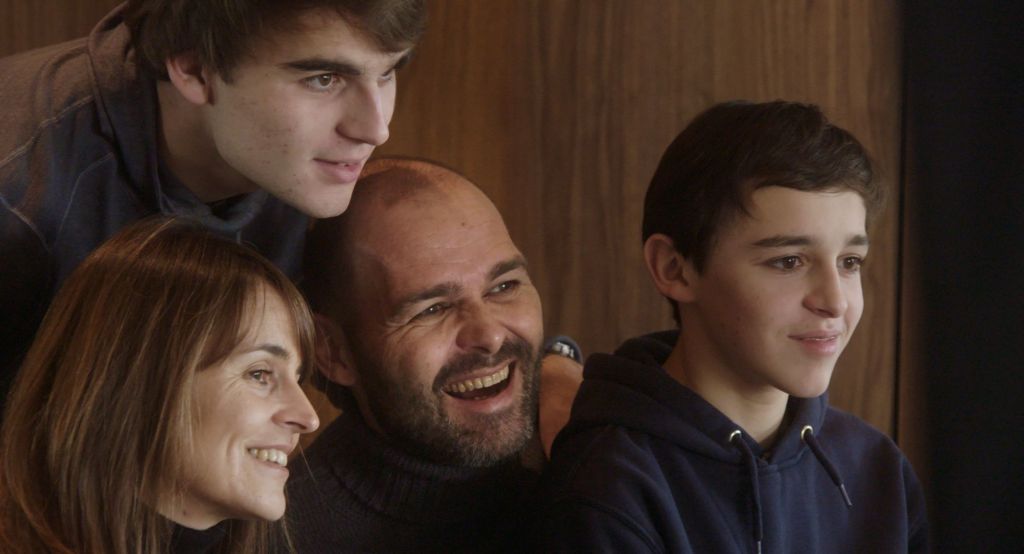
Living in the present.
The expression is over-used, Alexandre Kouchner admitted at a fund-raiser conversation in Paris with you and Delphine Horvilleur.
You have made ‘Living in the present’ yours.
“I am never interested in knowing what form my disability will take tomorrow. Today, I have limitations, but knowing what my limitations will be six months from now does not interest me. I will see in times,” you told Stéphanie Pillonca. “Carpe Diem! That’s what it is about. Seizing the day.”
This attitude was new to you.
You acknowledged in the film that living “in the moment was a calendar thing. The kind of expression (people) put on calendars or on posters and sweaters. That’s it, I thought it was bullshit of life philosophy, but actually, today, I embody it.”
If it was so simple to live in the present, why should we be reminded every day about the preciousness of life and the reality of death?
“We are fully aware of life when it breaks,” Delphine Horvilleur explained. Indeed, I never celebrate the fact that I am alive and that my organs grace me with silence when I wake up from a regenerative sleep. You wanted to meet with Delphine Horvilleur in the movie to discuss the meaning of death and life with her. She said that “to learn how to live, one has to learn how to die,” that death is a constant companion, and that some of our cells die every day.
In his text On the Shortness of Life, one of my favorite books, a reminder of a friend who was full of dreams, plans, and love just as you are and who left us too soon, Seneca wrote, “Life is long if you know how to use it.” The philosopher said that we “are living as if destined to live forever,” that our “own frailty never occurs” to us, that we “don’t notice how much time has already passed, but squander it as though (we) had a full and overflowing supply.”
Is living in the present about time and its relativity, our own progression through life or just being present and aware not about the future or the past, but of what is now? To paraphrase New York artist Peter Tunney, “The time is always now.”
We hear you on Instagram: “Do you want to know when I am going to die? It is not a question I ask myself. It goes against my philosophy: to know how to enjoy, without regrets for yesterday and without fear for tomorrow, to be fully immersed in life.”

There is a photograph I particularly liked in the movie, the one you took of Gilles Ménard and his daughter Malika. Gilles shared with you the same disease, and he, too, decided to speak up. He passed away last summer, but his legacy lives on, and your photograph is a testimony of it. “It is not just cinema,” you wrote on your Instagram account after sharing a note Malika sent to thank you, as she said, “We have turned every instant into a precious moment.”
You wrote me how excited you were to come to New York and present Invincible Summer with Martine Assouline, the Chair of Paris Brain Institute America, and Professor Yves Agid, co-founder of Paris Brain Institute with Professors Gérard Saillant and Olivier Lyon-Caen.
As you typed your answers to my few questions in France, the rising New York winter sun reflected on Manhattan’s skyscrapers and buildings. I took a rapid snapshot with my phone and sent it to you. You liked it immediately, so I took another one with a better camera and asked whether I could wander with you through the Village or Central Park, take a few pictures, and learn a thing or two from you when you are here.
“With pleasure” was your reply. “I now travel with a smaller Leica to able to use it.”
When Alexandre Kouchner asked where you source your energy, you replied, from my love for life; of course, you think of the moment after you die. You think about it to now find the words and implement the actions to convince those who love you that they should “not punish themselves—but rather remember to live life relentlessly.”
Did Delphine Horvilleur help you find these words when she said in your conversation at the Mazarine library in Paris: “I do believe that life, as paradoxical as it may seem, contains immortality in a subtle way through memory, through what remains after we are gone?” You asked your friends and partners “to make sure no one allows themselves to fall pointlessly into despair.”
I want to ask you again, “How are you?”
You replied that you are declining, practically the same answer you once gave Alexandre Kouchner. You decline yet remain strong as ever, caring for others, your visible clan, and us, the invisible strangers. We are much obliged.
Ah, you also told Alexandre Kouchner you would use magic if you could to “replace bitterness and hatred with tolerance and love.” And you would use magic to get your voice back. You miss it and have learned to speak with your eyes and smiles.
“How are you, Olivier Goy?”
At the end of your WhatsApp answer, you said: “In short, the more the disease tries to gag me, the more my voice carries. The more invincible I am!”
I will see you in New York, Invincible Olivier.
And to all who were kind enough to read this post to the last word, I hope to see you at Invincible Summer U.S. Premiere in New York with you on February 7.
I will then ask you the same question I am asking you all now:
How are you?
Come and greet Olivier Goy in New York
Screening of Invincible Summer, a film by Stéphanie Pillonca
February 7, 2024 at 6:30 pm
Lycée Français de New York – 505 East 75th street, New York, NY 10021
Registration (free): SOLD OUT
Donation to Paris Brain Institute: click here



Leave a Reply to Katherine BhanaCancel reply