
Lévy Gorvy Dayan Gallery | Until October 17, 2026
19 East 64th Street, New York, New York | link here
More about Inma Barrero: Click Here
“With maternal love, life makes a promise at dawn it can never hold.”
Romain Gary
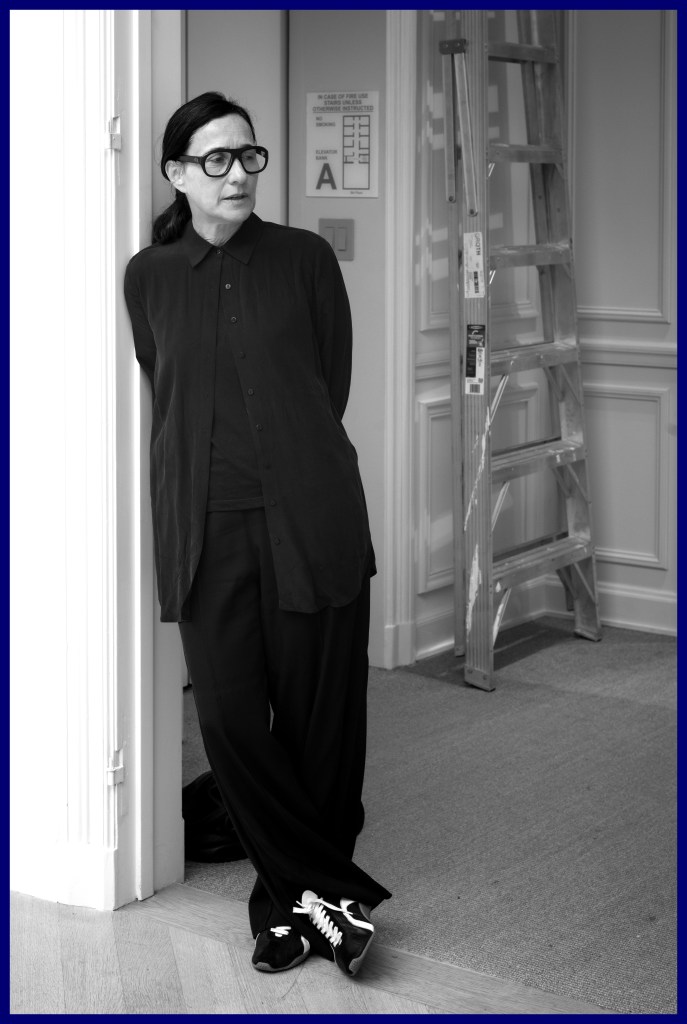
Inma Barrero is a friend.
She is the mother of two children, and Ion is her husband. But above all, she is an artist. She transforms earth and stone, gathered from around the world in every color through her travels and encounters, into works of sound and light.
Inma Barrero is an artist who is also a mother, a wife, a sister, a daughter and a friend. And I am lucky to be one of her friends.
For a few weeks, Lévy Gorvy Dayan, one of New York’s leading galleries, is devoting an exhibition to her, alongside two others: one on Pierre Soulages, the other on Kenyan artist Wangari Mathenge.
INMA BARRERO: MOTHERS
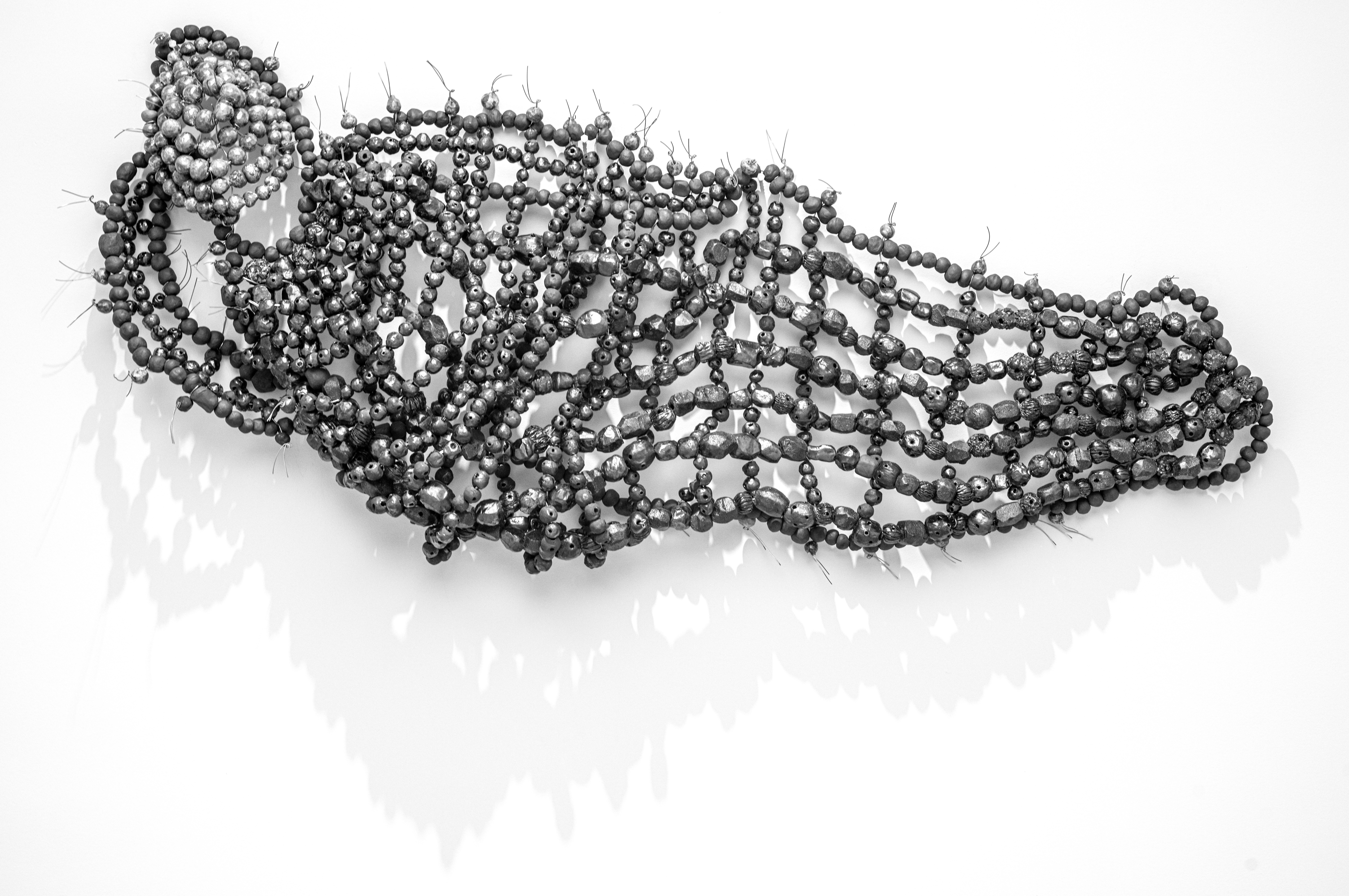
Eight large-scale sculptures, never shown before, each representing a “maternal presence,” and reflecting ancient and modern worlds across continents.
I once had the chance to witness up close the creation of one of Barrero’s works. It was commissioned by the Fundación FEMSA as part of an international dialogue on the element essential to life, the one whose absence, scarcity or poor quality is perhaps the greatest threat to humanity: water. The ceramist welcomed dozens of children into her New York studio, gathered around a long workbench. She drew them into an artistic and political conversation about water and invited them to help create the beads that would form the final piece.
“Be the Drop That Shapes the Wave” was first shown on the sidelines of a water conference at the United Nations in 2023, then at a bank in Washington, D.C. in 2025. To me, it evokes a fine rain, a cascade of fresh blue and white beads, each carrying the soft power of water.

The work asked something of us: an act, a game, a touch, an encounter. Almost a conversation. We were all invited to play “inside” the artwork.
Please touch with your hands!


The sculptures in “Mothers,” on view in Manhattan through Oct. 17, also speak to one another. One by one or all together, they invite meditation and reflection. A connection with the past, Barrero explains.
“The first ceramic pieces weren’t plates and pots,” she says. “They were symbols of female figures, a feminine force. I wanted to emphasize love, motherly love, the compassion that comes with motherhood.”
On the eve of the opening, Barrero told me that of all the symbolic forms of mothers and goddesses, the one closest to her heart is the Pachamama of the Andes.
“Mother Earth was a Pachamama, and she had no form.” Pachamama was the mountains. She was the rivers. She was the earth.
Pacha is the universe. It encompasses space-time and universal energy. The Incas’ Pachamama thus embodied it all: fertility, food and the cosmos. Life.
When the Spanish arrived, Barrero explains, they introduced the Virgin Mary to the Indigenous population, merging her identity with the valleys, the mountains and the trees. In other words, with Pachamama.
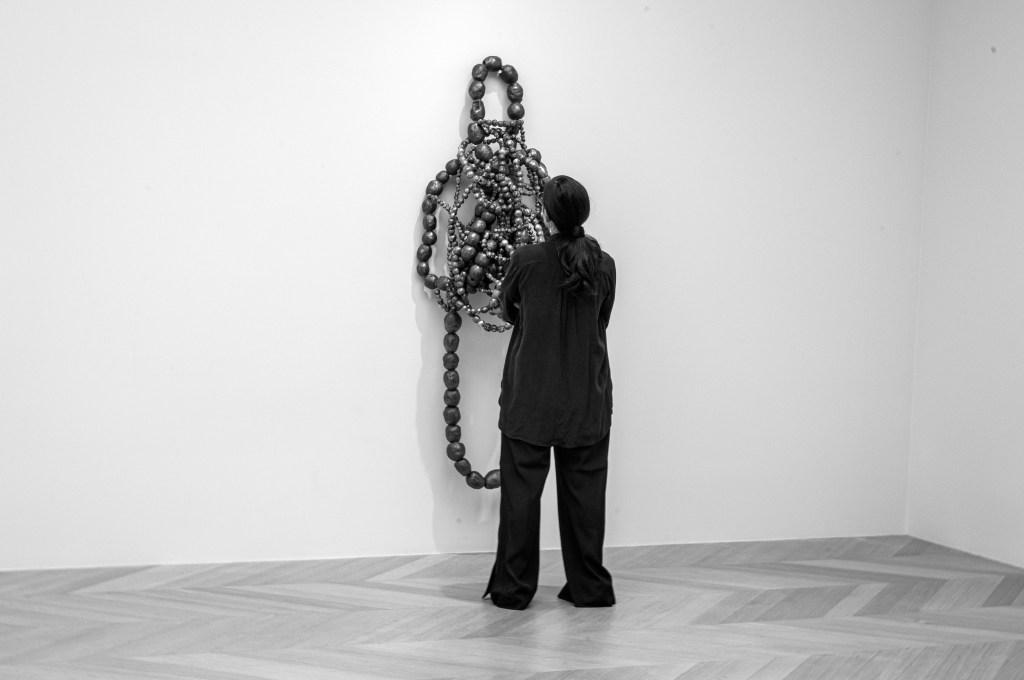
Barrero’s entire artistic process echoes Pachamama. Her works are made of thousands of solid, colored ceramic beads she shapes from clays, soils and terracotta from Japan, Mexico and Spain, along with fragments of broken porcelain and glass. Bound with water, glazed, fired and woven together with metal, they become the foundation of her compositions.
This is where the dialogue begins.
“This language of sewing together is for me the language of repair,” Barrero told me, “of putting together things that are separated.” She uses metal to speak the language of lañas, an ancestral technique of mending ceramics with metal staples. In Japan, she learned kintsugi, the art of revealing beauty in broken pottery.
Here lies what I find to be Barrero’s most powerful message: compassion for imperfection. More than that, the idea that imperfection is beauty, and that love is the acknowledgment of imperfection.
“That language is a meditation on separation, on how to link things together. It’s a prayer for everything happening in the world while I was creating these Mothers.”
The links between the beads, between the broken and the repaired, between the mothers themselves. Separation, as Barrero says, but also connection to the present moment.
Motherhood, she adds, is always evolving.
How to be a mother “should be a personal choice,” she says. “Even not being a mother is a personal choice, and women should have the freedom to choose. Whatever role they want to play in their children’s lives, how they want to care for their family, how much they work or not, whether they have children or not, I have a lot of respect for that.”

Another link exists between her identity as an artist and her identity as a woman. For Barrero, that center of gravity is her art. For anyone else, it could be something entirely different, but the tension between the two identities would remain the same.
“Motherhood intrinsically requires a lot of sacrifice,” Barrero says, drawing on her own experience. “Two things are fundamental to me: my family and my work. I cannot live without being an artist, and my family is essential. That’s why this work is so personal. Family demands a lot of time and attention, and so does being an artist. So, they are always in conflict.”
“But creating these pieces was a way of reconciling those two parts of my life.”
In this way, “MOTHERS” holds up a mirror to each of us, reflecting our own relationship to motherhood and perhaps to identity. For some, as mothers. For all, as children and as human beings.
“We’re all here thanks to our mothers, our grandmothers and Mother Earth.”
The respect and care we owe our mothers.
Pachamama.

Inma Barrero’s exhibition “MOTHERS”
Lévy Gorvy Dayan Gallery | Until October 17, 2026 – 19 East 64th Street, New York, New York | link here
Leave a Reply